Ancient life, set in stone.
Fossil sea creatures, Ice Age giants, amber and even fossil poo, for families, beachcombers and anyone who has ever picked up a curious stone. Every fact here links to its source. Warm up with the game: can you name the fossil from one clue?
Which fossil?
8 clues. Pick the fossil each one describes.
Press start for your first clue.
Ten fossils
- Megalodon
- Ammonite
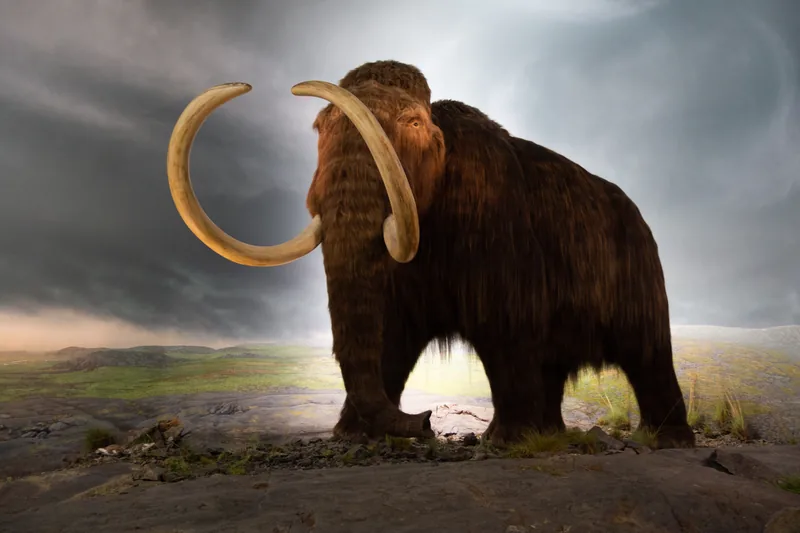
- Mammoth
- Smilodon
- Amber
- Trilobite
- Ichthyosaur
- Mosasaur
- Crinoid
- Coprolite
Each clue in the game is one of the facts in the fossil file. After you pick, the full fact and its source appear.
What is fossils.im?
fossils.im is a small hub for fossils that aren’t dinosaurs, from giant sharks to the coiled shells on the beach at Lyme Regis. Each fossil will get its own site with sourced facts, a little history, games and printables. Some true things to start with:
Giant tooth
The name megalodon means “giant tooth”. [source]
Mostly from the sea
Around 99% of the fossils we find are from sea animals such as shellfish and sharks, because sand or mud could bury them quickly. [source]
A very rare event
Fossilisation needs a special set of conditions, so it is actually a very rare event. Most things that die rot away completely. [source]
Stone dung
Coprolites are fossil dung. The name comes from the Greek kopros (“dung”) and lithos (“stone”). [source]
Explore our fossils
Seven fossils.im sites are ready to explore. Their links open in a new tab. Each card uses a credited photograph. The detailed stories, photographs and labelled diagrams live on each site.
- ammonites.fossils.im
Ammonites
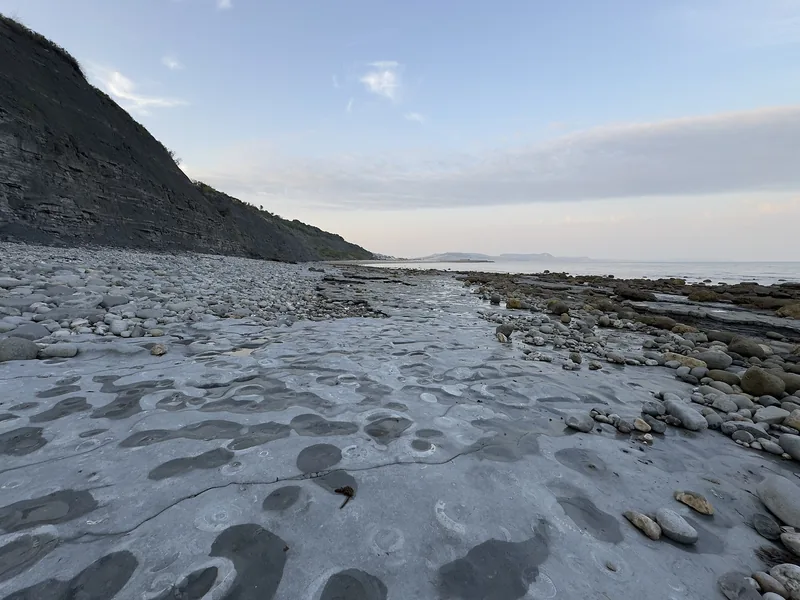
What ammonites were, how they lived and died out, how they became fossils, the Jurassic Coast, Mary Anning and the snakestone legends, with games and a public fact-check log.
Explore Ammonites  megalodon.fossils.im
Megalodon
The giant fossil shark known mostly from its teeth: how big it really was, its bite, what it ate, why it died out, how it compares with a great white, and the myths, with games and a public fact-check log.
Explore Megalodon trilobites.fossils.im
Trilobites
The three-lobed sea animals of the Palaeozoic: their crystal eyes, how they rolled up, how big they grew, how they died out and the Dudley Bug, with games and a public fact-check log.
Explore Trilobites- mammoths.fossils.im
Mammoths
Woolly mammoths and their relatives, where the fossils are found, and the last herds on Wrangel Island and St Paul Island, with games and a public fact-check log.
Explore Mammoths  amber.fossils.im
Amber
Hardened tree resin, with a desk of official deposits — Baltic, Dominican and Cretaceous holdings — and copal, which is not yet amber. Every date is sourced.
Explore Amber smilodon.fossils.im
Smilodon
The sabre-toothed cat that is sometimes called a tiger, and is not one. Official wording on the canines, the three species, and when it lived, with a desk of questions and free fact sheets.
Explore Smilodon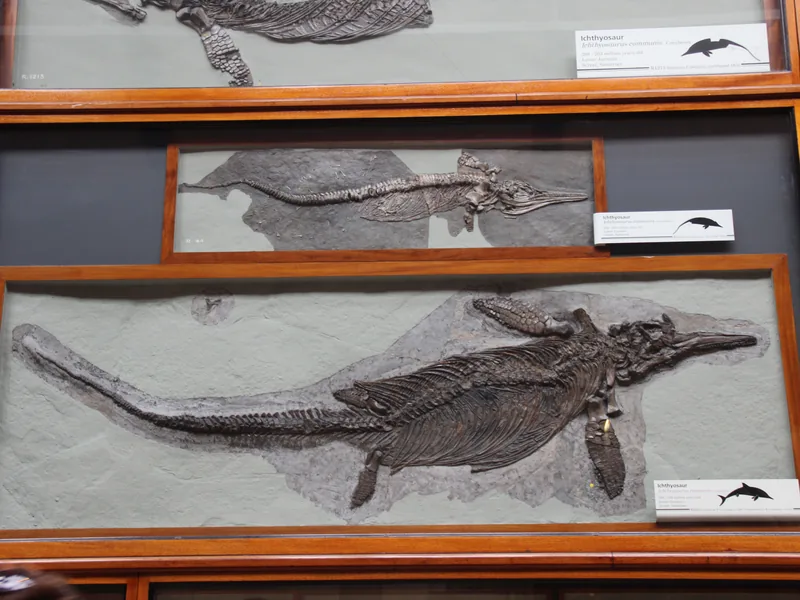 ichthyosaurs.fossils.im
Ichthyosaurs
The Lyme Regis find of Joseph and Mary Anning, with official Natural History Museum dates kept apart, and the marine reptiles that included the biggest marine reptile ever known, with a desk of questions and free fact sheets.
Explore Ichthyosaurs

🥃 Quattro's Corner
Dispatches from The Thinking Water
By Jove! Quattro is presently occupied with a rather important glass of sherry. Dispatches from The Thinking Water will commence once the moustache has been suitably groomed and the thinking water has reached operational temperature. Tally-ho!
Coming soon
Three more fossil sites are planned.
- Mosasaurs
mosasaurs.fossils.imPlanned: the sea-going lizards of the Cretaceous, how big they grew, and what they ate.
Coming soon - Crinoids
crinoids.fossils.imPlanned: sea lilies and feather stars, ancient and living, and why fossil crinoids help date rocks.
Coming soon - Coprolites
coprolites.fossils.imPlanned: fossil poo, how William Buckland and Mary Anning worked out what it was, and what it tells us about ancient meals.
Coming soon
Sister hubs
fossils.im is part of the same REALLYBYTE family as these hubs:
Enjoyed the fossils?
No pop-ups. No intrusive advertising. Just interesting stuff. A little support helps the next fossil site get built.